Easy Cocktail Painting Ideas: Beginner Acrylic Projects for Home Bars
Cocktail painting in just 30 minutes: learn glowing amber and ruby acrylic washes for your home bar wall, no experience needed. Grab your brushes today.
Rowan Vale
Author
Prep: 30 mins · Cook: 0 mins · Total: 30 mins · Serves: 1 · Calories: ~180 kcal
Cocktail painting turns a blank canvas into a glowing amber, ruby, and lime bar scene in about 30 minutes. Forgiving and cozy, it's a weekend project that makes your home bar wall feel finished.
Why This Recipe Works
Thin acrylic with water for glassy washes: A few drops of water let the paint flow like stained glass. Thin layers build depth without hiding your pencil sketch underneath.
Blot excess paint with paper towels: Pressing a folded towel against wet paint lifts extra pigment and softens harsh edges. This keeps the amber from turning muddy where it meets the ruby.
Flat brush for broad, even color fields: The half-inch flat brush lays down wide, straight strokes. Consistent strokes dry smoother than dabbing, so your backdrop looks polished.
Fine liner outlines after paint fully dries: Acrylic sets quickly, and wet black lines can smear into the color. Waiting until the surface is dry keeps the size 0 lines crisp, like inked glass edges.
Ingredients You'll Need
Stretched Cotton Canvas (11 x 14-inch, Primed): This is your blank backdrop, the wall-ready surface where the whole cocktail scene comes together. Primed cotton keeps paint sitting on top, so colors stay bright. A pre-stretched canvas panel or sturdy wood panel works if you can't find cotton.
HB Pencil: Light graphite marks guide your cocktail glass outline without fighting the paint. Keep your hand loose so the line stays faint and easy to cover. Any light graphite pencil will do the job.
Amber Acrylic Paint: Amber gives your drink its warm, golden glow, the heart of the whole scene. Thin it with a few drops of water so it flows like stained glass. Yellow ochre with a touch of burnt sienna gets you close if amber isn't on hand.
Ruby Red Acrylic Paint: Ruby brings the rich, jewel-toned pop that makes a bar wall feel lively. Blot extra paint so it doesn't turn muddy where it meets the amber. Crimson or cadmium red makes a solid stand-in.
Lime Green Acrylic Paint: Lime adds a bright citrus accent, like a wedge perched on the rim. Keep it light so it reads fresh rather than heavy. Mix yellow with a little green for a similar bright shade.
Sky Blue Acrylic Paint: Sky blue adds a cool contrast that balances the warm amber and ruby. Use it sparingly for a highlight or background wash. Light cerulean or pale turquoise is a close substitute.
Ivory White Acrylic Paint: Ivory white creates glints on the glass, like light catching the rim. Build it in thin layers so it stays soft instead of chalky. Titanium white works well, or add a touch of cream acrylic for warmth.
Black Acrylic Paint (for outlines): Black defines the glass edges and gives your cocktail its crisp silhouette. Paint it only after the color is fully dry so the lines stay sharp. Dark brown or deep navy makes a good stand-in.
Round Brush, Size 6: This brush holds enough paint for smooth curves across the bowl of the glass. Its pointed tip gives you clean edges on rounded shapes. Any synthetic round brush near size 6 will work.
Flat Brush, ½ Inch: The flat brush lays down broad, even color fields for your backdrop. Its straight edge gives you clean, steady strokes. A ½-inch foam brush or any flat synthetic brush is an easy swap.
Fine Liner Brush, Size 0: This tiny tip handles thin outlines and fine details like the stem or garnish lines. Use it only once the paint is completely dry. A size 00 detail brush is the closest match.
Palette or Plate: This is your mixing station, where amber, ruby, and lime blend into the exact shade you want. A smooth surface keeps cleanup easy. A paper plate, ceramic dish, or glass sheet works fine.
Clean Water (1 cup): Water thins your paint into smooth, glassy washes and rinses brushes between colors. Change it when it turns cloudy so your colors stay clean. Clean tap water is what you need here.
Paper Towels (1 roll): Paper towels blot extra paint from your brushes and soften harsh edges. Keep a few folded squares handy for quick cleanup. A clean cloth rag works just as well.


How to Make It (Step by Step)
It all comes together on one primed canvas, from pencil sketch to glassy washes to crisp black outlines. Even if you've never picked up a paintbrush, you'll love how those amber and ruby layers glow.
Recipe
- 1 (11 x 14-inch) stretched cotton canvas, primed
- 1 HB pencil, for light sketching
- 1 tube amber acrylic paint
- 1 tube ruby red acrylic paint
- 1 tube lime green acrylic paint
- 1 tube sky blue acrylic paint
- 1 tube ivory white acrylic paint
- 1 tube black acrylic paint, for outlines
- 1 round brush, size 6
- 1 flat brush, ½ inch
- 1 fine liner brush, size 0
- 1 palette or plate, for mixing
- 1 cup clean water, for rinsing brushes
- 1 roll paper towels, for blotting

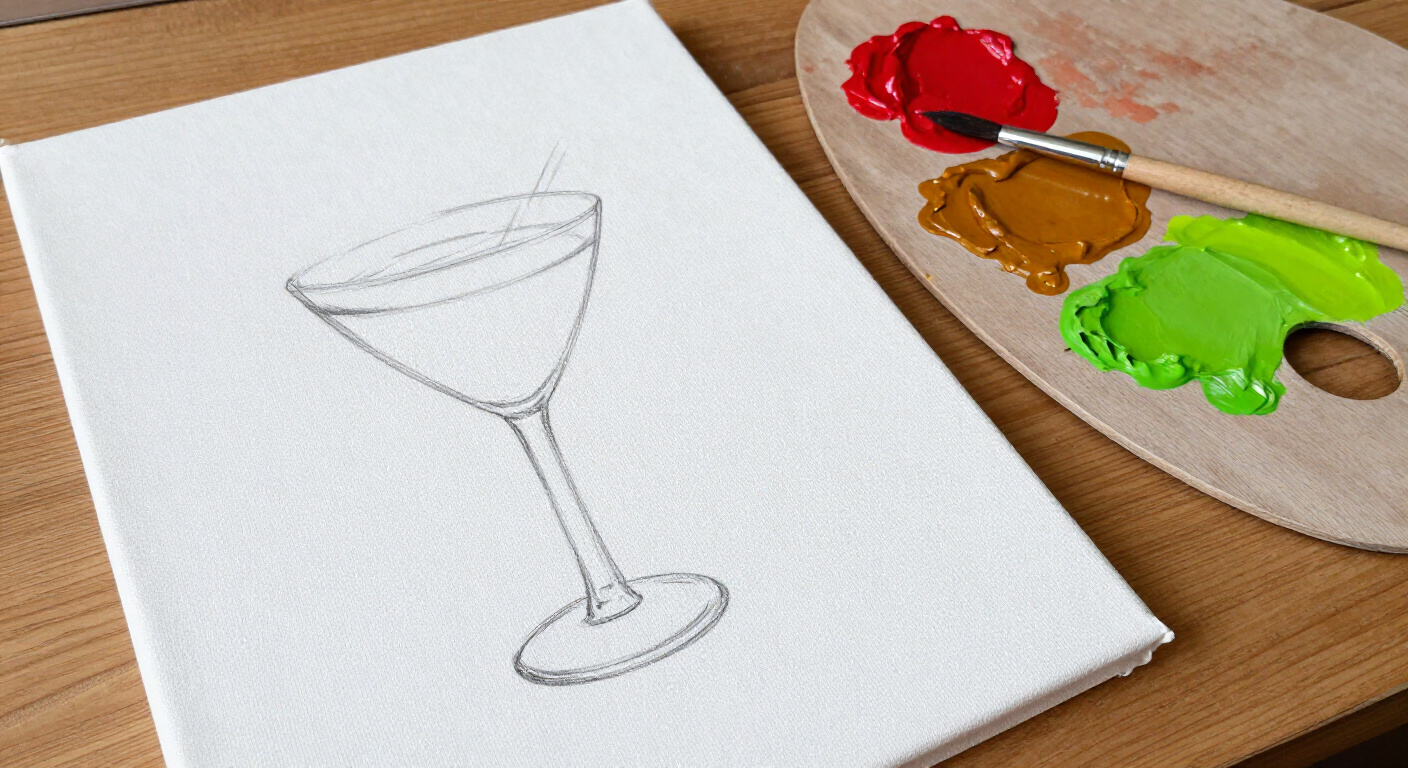
Blank primed 11 by 14-inch stretched cotton canvas with a light HB pencil sketch of a cocktail glass outline, resting on a wooden table beside a palette with dabs of ruby red, amber, and lime green acrylic paint, round size 6 brush resting across the palette, inclined 45-degree three-quarter view, natural daylight, realistic colors.
Recipe Notes
• Storage: Let the finished canvas dry flat for 24 hours. Then store it upright, away from direct sunlight. Freezing isn't needed, and there's no reheating for paint.
• Key substitution: No stretched canvas? A primed canvas panel or wood board of the same size works just as well.
• Make-ahead tip: Prime and pencil-sketch your canvas up to two days early. Keep it flat and dust-free until you're ready to paint.
• Common mistake: Loading too much paint on the brush causes drips and gloppy edges. Dip lightly, then wipe the brush on the palette's edge.
Serving size: 1 portion · Calories: 180 · Total Fat: 7g · Saturated Fat: 1g · Carbs: 22g · Fiber: 1g · Sugar: 18g · Protein: 2g · Sodium: 25mg
Tips and Tricks
- Equipment: Reach for the ½-inch flat brush: Its broad edge lays down straight, even color fields for your backdrop without streaks or patchy spots.

- Temperature precision: Keep your studio between 65 and 75°F: Acrylic thickens in a cold room and dries too fast in a hot one. Mid-range warmth keeps your washes smooth.
- Common mistake: Scrubbing a half-dry wash: Going back over a patch that is partly set leaves streaks. Let each layer dry before you add the next one.
- Flavour upgrade: Stir a drop of gloss medium into your ruby: It makes the red glow like sunlit stained glass. Skip it for a matte, softer finish.
- Texture tip: Dry-brush a frosted rim highlight: Barely load ivory white on the round size 6 brush, then drag it lightly along the glass rim for a frosty shimmer.

Frequently Asked Questions
Can I swap the acrylic paints for watercolor or use a different canvas if I don't have cotton?
Yes, but acrylic is best for layering. If you lack stretched cotton, use a primed wood panel or thick cardstock sealed with 2 coats of gesso, letting each dry 1 hour. Watercolor works for washes, but skip the black outlines and use a 0.3mm waterproof pen instead.
How long should a finished cocktail painting cure before varnishing?
Let the paint cure for about 3 weeks, then seal it with a satin acrylic varnish that protects it for years in a cool, dry spot. Dust it gently with a soft dry brush, and never wipe it with a damp cloth.
Why do my ruby and amber washes look streaky or patchy on the canvas?
Streaks usually mean the paint is too thick or the brush is nearly dry, so add a few drops of water until the wash flows like thin cream. Reload the flat brush and work in long, even strokes, letting each layer dry before adding the next.
What to Serve With This
- Spiced Marcona Almonds: Their crunchy, salty bite contrasts with the smooth, cool sip of a lime-forward cocktail.
- Castelvetrano Olives: Briny, buttery olives cut through the sweet, fruity notes of a ruby-red drink.
- Whipped Feta Dip with Crackers: The creamy, tangy dip and crisp crackers balance the sharp citrus in your glass.
- Grapefruit and Mint Salad: Juicy, bright citrus feels fresh and acidic, lifting the flavors and cleaning your palate between sips.

Share this article
About the author
Rowan Vale
Rowan found their people behind a bar, in a city where they had arrived with one bag and no plan. Every cocktail they mix at the window is a little thank-you to the nights that could have gone badly and did not. They shake hard, pour honest, and never rush a good drink.